You've probably found yourself standing over a short shot wondering which club to pull. Maybe your ball is just off the green. Maybe there's a bunker between you and the hole. Or maybe you've heard another golfer talk about their "56-degree" or "60-degree" wedge and wondered what those numbers actually mean.
For many golfers, wedges are the least understood clubs in the bag. They may own a pitching wedge and a sand wedge that came with their iron set, but they aren't sure what separates one wedge from another or why golfers carry multiple options.
This guide covers the basics. You'll learn what wedges are, how the four types of wedges differ, and how to think about common shots around the green. By the end, you'll have a better understanding of why wedges play such an important role in scoring and which club might make sense for the shot in front of you.
WHAT YOU WILL LEARN
- What Is a Golf Wedge?
- The Four Types of Wedges
- What Else Is on a Wedge?
- Which Wedge Should You Use Around the Green?
- How to Practice Your Golf Wedge Shots
- Build a Wedge Setup Around Your Game
- Frequently Asked Questions
Estimated Reading Time: 9-10 minutes
WHAT IS A GOLF WEDGE?
Wedges are the highest-lofted clubs in your bag and are designed for the shots you play most often inside roughly 120 yards. From approach shots to chips, pitches and bunker shots, they're the clubs relied on when precision matters most.
Most golfers think of their pitching wedge as simply the last club in their iron set, and in many cases that's exactly what it is. But wedges are a category of clubs all their own. Compared to longer irons, wedges generally feature more loft, shorter shafts, and sole designs built to handle a variety of shots and course conditions.
One of the most important terms you'll hear when talking about wedges is loft. Loft is the angle of the clubface. More loft launches the ball higher, sends it a shorter distance and helps it stop faster. Less loft produces a lower ball flight that travels farther and rolls more after landing.
WHY WEDGES ARE CALLED SCORING CLUBS
You'll often hear wedges referred to as "scoring clubs."
The reason is simple: these are the clubs used closest to the hole.
Whether you're hitting an approach from 100 yards, pitching over a bunker or chipping from just off the green, wedges are often responsible for the shots that determine whether you save par, make bogey, or write down a bigger number.
During most rounds, golfers spend more time hitting shots inside 120 yards than they realize. Add in chips, bunker shots, and recovery shots around the green, and wedges quickly become some of the most frequently used clubs in the bag. That's why improving your understanding of wedges can have a direct impact on your score.

THE FOUR TYPES OF WEDGES
While all wedges are designed to help golfers score from short range, each wedge serves a different purpose. The four primary wedge categories are pitching wedges, gap wedges, sand wedges, and lob wedges, with each separated primarily by loft.
Most golfers already own at least one wedge. A pitching wedge comes standard in nearly every iron set, and many sets also include a sand wedge. For newer golfers, the best place to start is learning what the wedges already in the bag do before worrying about adding another club.
Golfers interested in adding another wedge should focus first on understanding the clubs already in their bag. From there, identifying the yardages between clubs can help determine whether there's a gap that needs to be filled. For a deeper look at wedge spacing, read How to Fill Your Distance Gaps .
THE FOUR WEDGE TYPES
- Pitching Wedge (typically 44°-48°)
Typically the lowest-lofted wedge in the bag. A pitching wedge is commonly used for full approach shots and lower-trajectory shots around the green.
- Gap Wedge (typically 48°-52°)
As the name suggests, a gap wedge helps fill the distance gap between a pitching wedge and a sand wedge.
- Sand Wedge (typically 54°-56°)
Originally designed for bunker play, the sand wedge has become one of the most versatile clubs in golf. Many golfers rely on it for pitches, chips, approaches, and bunker shots.
- Lob Wedge (typically 58°-60°)
The highest-lofted wedge in most setups. Lob wedges are commonly used when golfers need additional height, need to carry an obstacle, or want the ball to stop more quickly after landing, and they're often the club of choice for short shots around the green that require a little more carry before landing softly near the hole.
The important thing to remember is that no wedge is "better" than another. Each one exists to create a different trajectory and cover a different distance.
WHAT ELSE IS ON A WEDGE?
Beyond loft, you'll often hear golfers talk about bounce and grind.
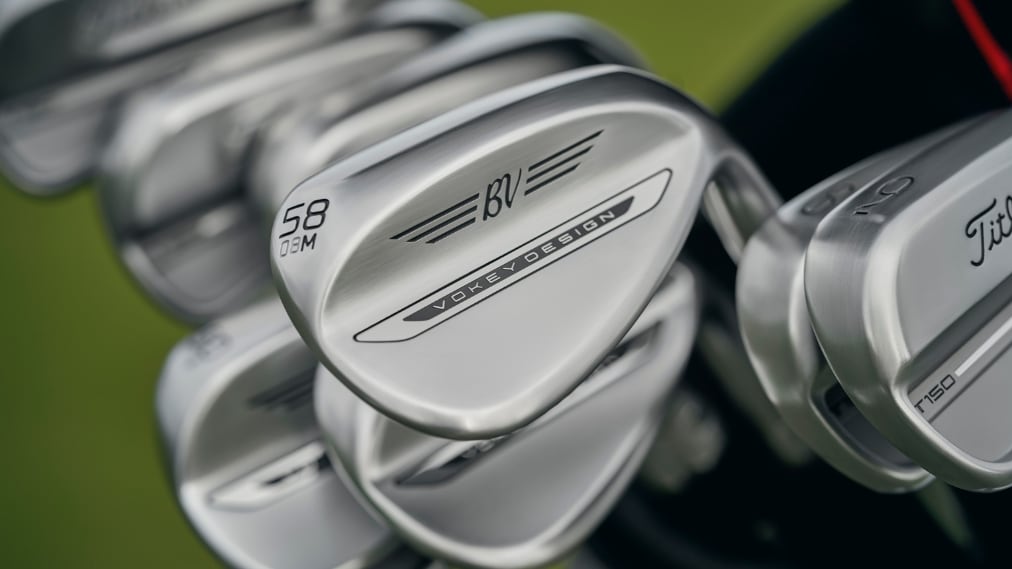
Bounce is the angle of the sole that helps keep the club from digging into the turf or sand. Grind refers to the shaping of the sole, which influences how the club sits on the ground and moves through different conditions.
While loft largely determines trajectory and distance, bounce and grind influence how the club interacts with the turf and sand. Together, these three elements help determine how a wedge performs in different situations. If you're just getting familiar with wedge terminology, these short videos on loft , bounce and grind provide a quick visual explanation of each concept. For a more complete overview, visit the Loft, Bounce & Grinds resource center
. 
WHICH WEDGE SHOULD YOU USE AROUND THE GREEN?
One of the biggest misconceptions in the short game is that there is a "correct" wedge for every shot around the green.
There isn't.
Many golfers develop a comfort club and reach for it every time. While there's nothing wrong with having a favorite wedge, understanding the shot in front of you is often more important than relying on the same club for every situation.
Before choosing a wedge, it helps to understand the different types of shots you'll encounter.
THE SHOTS YOU'LL PLAY WITH A WEDGE
Approach Shot
An approach shot is any shot played toward the green, typically from the fairway or rough. Wedges are often used for approach shots from inside 120 yards, where distance control becomes especially important.
Learn More: Jordan Spieth on Hitting Wedge Shots Close
Chip Shot
A chip shot is played from close to the green and spends more time rolling than flying. It's one of the most common short-game shots golfers face during a round.
Learn More: How to Hit Greenside Chips from Uneven Lies
Pitch Shot
A pitch shot flies higher than a chip and typically lands softer with less rollout. You'll often see golfers use a pitch when they need the ball to carry a greater distance through the air.
Bunker Shot
A bunker shot is played from sand and is designed to lift the ball out of the bunker and onto the green.
Watch: How to Play a Basic Greenside Bunker Shot
Flop Shot
A flop shot is a high, soft shot that lands with very little rollout. It is typically used when golfers need to carry an obstacle or stop the ball quickly near the hole.
Bump and Run
A bump-and-run is a low-running shot that lands early and rolls most of the way to the hole.
Learn More: Three Shots Using the Flight Line Advantage
Understanding the names of these shots is the first step. The next is learning how trajectory changes the way each shot behaves after it lands. Vokey's Flight Lines concept is a helpful introduction to understanding how trajectory influences shot selection and scoring around the green.
WHAT IS THE DIFFERENCE BETWEEN A CHIP AND A PITCH?
A chip and a pitch may look similar, but they are designed to produce different results.
A chip shot launches lower and spends more time rolling after it lands. It is often the simplest option when there is plenty of green between the ball and the hole.
A pitch shot flies higher and lands softer than a chip shot. Golfers often use it when they need to carry the ball over an obstacle or when there isn't much green available for the ball to roll.
Golfers can use the same wedge to hit either shot. The key difference is the shot being played, not necessarily the club in hand.
Learn More: Pitching vs. Chipping with Brad Faxon
WHAT DECIDES WHICH WEDGE YOU PULL?
When deciding which wedge to use, think about how much of the shot needs to fly and how much can roll once it lands.
That's often the simplest way to match the shot to the club.
Less loft generally produces a lower shot that rolls farther after landing. More loft generally produces a higher shot that carries farther and rolls less.
One of the simplest ways to understand wedge selection is to think about trajectory. Different trajectories create different amounts of carry and roll, which is why skilled wedge players often visualize the shot they want before choosing a club. If you're unsure which lofts, bounce, or grinds may fit your game, the Vokey Wedge Selector Tool can help identify a setup based on your swing, course conditions, and short game preferences.
Four factors usually influence the decision:
- How far you are from the hole
- How much green you have available
- Whether an obstacle like a bunker or thick rough is in the way
- What type of lie you're playing from, including fairway, rough, or sand
As golfers gain experience, these factors become easier to evaluate and wedge selection becomes more intuitive.
For additional guidance, explore:

HOW TO PRACTICE YOUR WEDGE SHOTS
Like every part of golf, wedge play improves through practice.
While technique changes depending on the shot being played, developing a few core skills can help golfers become more comfortable and confident with their wedges.
Setup and Stance
Every wedge shot starts with a good setup. Building consistent posture, alignment and ball position can help create more predictable results.
Watch: Setup and Stance Fundamentals
Body Rotation
Good wedge play involves more than just the hands and arms. Learning how the body works through the shot can improve consistency and control.
Watch: Body Rotation Drill
Ball Contact
Consistent contact is one of the most important skills in the short game. Even simple practice focused on strike quality can help golfers improve distance control and confidence. The grind on a wedge also plays an important role, as it influences how the sole interacts with the turf and can help golfers make cleaner, more consistent contact from a variety of lies.
Watch: Improve Wedge Contact
COMMON MISTAKES TO AVOID WHEN USING WEDGES
Understanding wedges starts with avoiding a few common mistakes.
Mistakes in Club Selection
- Using the same wedge for every shot
- Choosing a club based only on distance
- Ignoring how much green is available
- Not considering obstacles between the ball and the target
Mistakes in Swing Execution
- Trying to help the ball into the air
- Decelerating through impact
- Constantly changing setup positions
- Focusing on complicated techniques instead of solid contact
Many of these mistakes become easier to avoid once golfers understand what each wedge is designed to do.
BUILD A WEDGE SETUP AROUND YOUR GAME
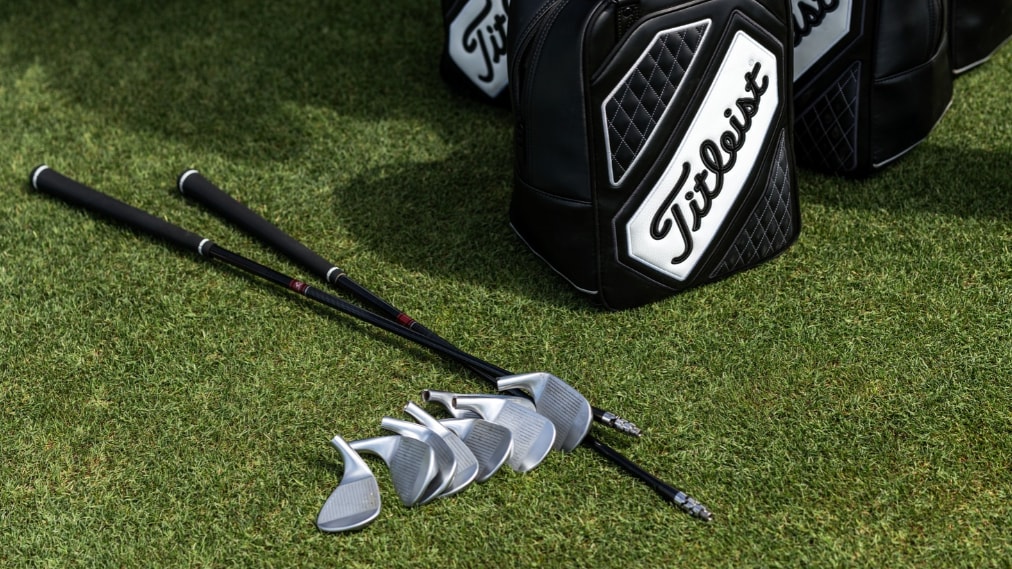
Unlike irons, wedges are often sold individually.
That's not about adding clubs for the sake of adding clubs. It's about giving golfers the ability to build a setup that fits their game.
The right wedge setup depends on several factors, including the loft of your pitching wedge, the distance gaps you're trying to cover, the course conditions you typically play, and the types of shots you prefer around the greens.
Buying wedges individually allows golfers to fill distance gaps, choose sole designs suited to their conditions and build their setup over time. As golfers become more familiar with bounce and grind , they can build a wedge setup that better fits both their swing and the courses they play.
As your game develops, a wedge fitting can help identify loft, bounce, and grind combinations that fit your swing and course conditions.
FREQUENTLY ASKED QUESTIONS
WHAT MAKES A WEDGE MORE FORGIVING?
In golf, forgiveness describes how well a club performs when contact isn't perfect.
With wedges, forgiveness is influenced heavily by bounce. Bounce helps the club glide through the ground rather than dig excessively into the turf or sand, which can help produce more consistent results. As Bob Vokey famously says, “Bounce is your friend.”
Takeaway: Forgiveness in a wedge comes mostly from bounce, which helps the club glide through the turf instead of digging.
Learn More: The Forgiveness That Fits Your Swing
WHAT DO THE LETTERS AND NUMBERS ON A WEDGE MEAN?
Wedge markings vary depending on the manufacturer and type of club.
Wedges that come with iron sets often use letters like P for pitching wedge or S for sand wedge. Individually sold wedges are typically first identified by loft because loft provides a more precise description of how the club will perform.
A Vokey wedge marked 56.10S can be read as:
- 56 = Degree of Loft
- .10 = Degree of Bounce
- S = Grind
Takeaway: Letters don't always mean the same thing. On most Vokey wedges, the numbers indicate loft and bounce, while the letter identifies the grind.
ARE WEDGES HARDER TO HIT THAN IRONS?
Not necessarily.
Wedges require precision because many wedge shots are played from closer distances where small mistakes can have a larger effect on the outcome. Higher-lofted wedges can also provide less margin for error than lower-lofted clubs.
That said, wedges are skills clubs. The more golfers practice them, the more comfortable and confident they become.
Takeaway: Wedge shots demand cleaner contact than full swings, which is why they reward practice.
IS A WEDGE SWING DIFFERENT FROM AN IRON SWING?
The same fundamentals of posture, balance, and body rotation apply to both wedge and iron swings.
Full wedge swings are very similar to iron swings. Shorter shots such as chips and pitches typically involve adjustments to setup, ball position, and swing length that allow golfers to better control trajectory and distance.
Takeaway: You don't need to learn an entirely new swing. The fundamentals carry over, but your technique adjusts depending on the shot you're trying to play. The more you understand wedges, the easier it becomes to choose the right club for the shot in front of you. Start by learning the wedges already in your bag, what they're designed to do and how loft influences ball flight. From there, you'll begin to understand why wedges have earned their reputation as golf's scoring clubs.